Your Brain Is Keeping Score: Why Confidence Follows Action, Not the Other Way Around
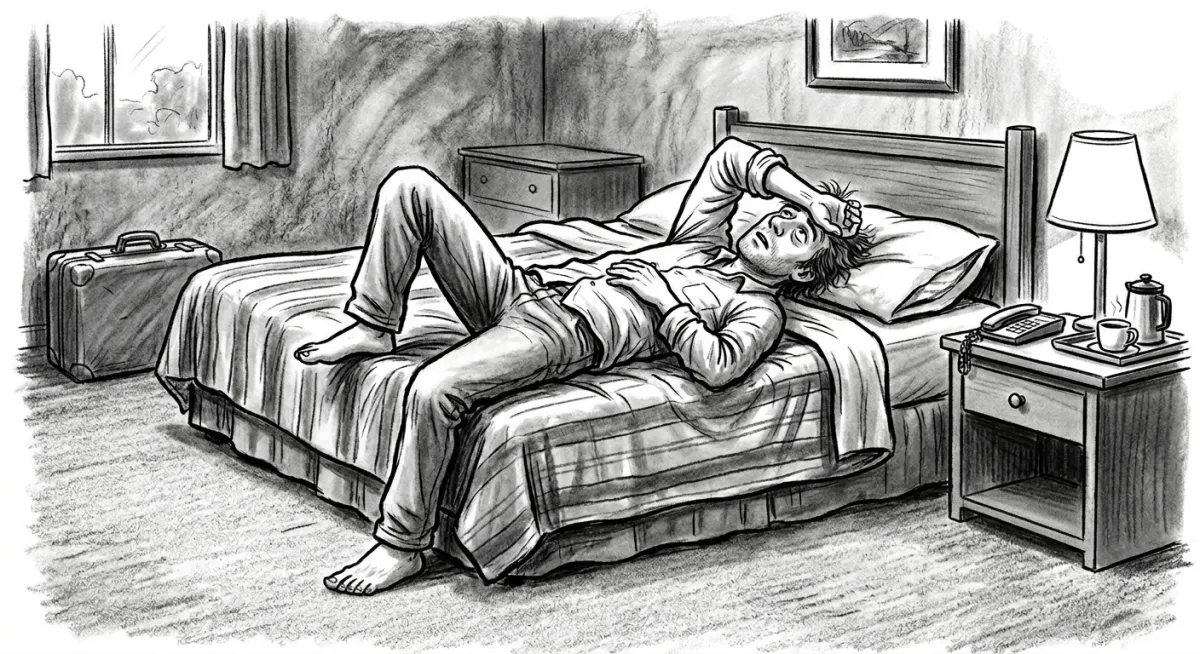
I woke up in a cheap hotel room the morning after the sheriff walked me out of my own house.
No kids down the hall. No coffee already made. No routine. Nothing that told me who I was supposed to be that day.
I lay there for a while. The ceiling was not interesting. Neither was the floor.
Then one thought pushed through everything else.
This is not sustainable. Do something else.
So I got up.
Not because I had a strategy. Not because I felt ready or hopeful or any of the things people say you're supposed to feel before you make a move. I got up because lying there wasn't working and getting up was the only other option I could think of.
I made bad hotel coffee. I took a walk around a parking lot. I called someone who wasn't going to make it weird.
Small things. Stupid things, almost.
But something shifted that morning that I didn't fully understand until much later. What I thought was survival behavior was actually the first entry in a new file my brain was building.
Why Confidence Doesn't Work the Way Most Men Think It Does
Most men believe confidence is a result. You do the thing, the thing succeeds, and then you feel confident. That's the sequence they're waiting for. Do, succeed, feel good. Repeat.
The problem is that sequence almost never starts on its own after a major loss. When your marriage ends, or your business collapses, or the life you built gets dismantled overnight, you don't get to wait for a win before you feel capable again. Wins are downstream. They require movement to exist. And movement requires a baseline of self-trust that the loss just took from you.
So men wait. They wait for the confidence to arrive before they act. And the confidence doesn't come. Because it can't come that way.
What actually builds confidence isn't success. It's consistency. Specifically, it's the experience of doing what you said you would do, even when the stakes are low, even when no one is watching, even when you're doing it in a parking lot in clothes you slept in.
Your brain is always keeping score. Not on your wins. On your follow-through.
What Your Brain Is Actually Tracking
There is a quiet update that happens every time you do what you said you would do. It doesn't announce itself. You don't feel it in the moment. But your brain is revising its file on you in real time.
The file has one question in it: Is this a person who can be trusted to follow through?
Every small action that matches your intention adds a data point. Make the call you said you'd make. Get up when you said you'd get up. Take the walk. Cook the meal. Reach out first. Each one of those is a vote cast in your own favor. Not a dramatic vote. Not a life-changing vote. A quiet one.
The file updates.
And at some point, not all at once, not dramatically, the file says something different than it said before. Maybe I am the kind of person who does what he says. Maybe I can be trusted. Maybe I am not done.
That is confidence. Not the result of a win. The result of a pattern your brain noticed while you weren't paying attention.
This is the mechanism that most confidence advice skips entirely. It's not about mindset. It's not about visualization. It's about giving your brain enough consistent evidence to update its assessment of you.
The Gap Where Most Men Stop
The hardest stretch of any rebuild is the period between starting to move and seeing results. That gap can last weeks. Sometimes months. During that stretch, the actions feel pointless because nothing visible has changed yet.
This is where most men stop.
They take the walk once and don't feel better. They make the call and it doesn't lead anywhere. They do the small thing and the small thing doesn't seem to matter. So they conclude it isn't working. They go back to waiting.
What they don't know is that the file is still updating. Quietly. Under the surface. Every completed action is being logged whether the result shows up or not.
The first step of the R.E.A.L. Framework I use with clients is Reflect - getting honest about where you actually are and what you've been telling yourself. Most men in this gap aren't reflecting. They're measuring. They're checking for results before results are possible. And when the results aren't there, they take it as confirmation that they were right to doubt themselves.
They weren't right. They were just early.
What Doing Something Else Actually Means
When I told myself that morning in the hotel room to do something else, I didn't mean do something big. I didn't mean fix the situation. I didn't mean feel better.
I meant do anything other than lie there and let the ceiling win.
The walk around the parking lot didn't solve anything. The bad coffee didn't help. The phone call didn't change my circumstances. But each one of those actions was a small declaration that I was still in the game.
That's what movement does in the early stages of a rebuild. It doesn't produce results. It produces evidence. Evidence that you are still functioning. Evidence that you can be trusted to take a next step even when you don't know where it leads.
That evidence is the foundation of everything that comes after.
The clients I work with who rebuild the fastest are not the ones who had the best plan. They're the ones who started moving before they had a plan and kept moving until the plan became obvious.
Confidence doesn't arrive before the movement. It grows inside it.
The Only Move That Matters Right Now
If you're reading this from your own version of that hotel room (figuratively or literally) the question isn't whether you have a strategy. The question is whether you can do one thing today that matches what you told yourself you would do.
It doesn't have to be significant. It has to be completed.
Make the call. Take the walk. Send the message. Get off the couch. Do the one thing that has been sitting on your list since the day everything changed.
Your brain will notice. It always does.
That's the first entry in the new file.
If you want to know where your confidence actually stands right now, the R.E.A.L. Assessment takes five minutes. I read every submission personally and respond within 48 hours.