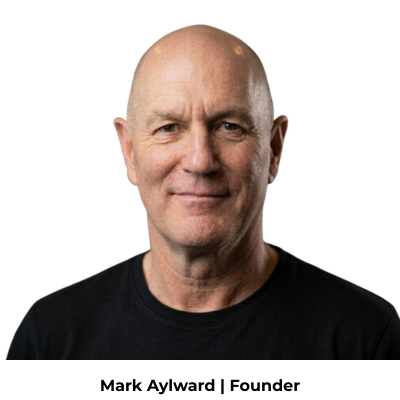
Why Smart Men Stay Stuck After Divorce | Mark Aylward
There is a version of stuck that looks nothing like stuck.
You are busy. You are working. You are doing the things smart, driven men do when they want to get somewhere. You have read the books. You have hired coaches. You have restructured, rebranded, pivoted, and pushed harder.
And you keep landing in the same place.
Not because you are not capable. Not because the strategies are wrong. Because the person running those strategies is operating on a system that was never built for what you are trying to do.
That system is running right now. And most men have never looked at it.
The Brain Was Built to Survive, Not to Thrive
Your brain is not your business partner. It is a pattern-matching system with one primary directive: keep you alive.
That means when you hit resistance, your brain does not ask what is possible. It asks what is dangerous. Fear, doubt, overwhelm, and paralysis are not signs of weakness. They are your brain doing exactly what it was designed to do.
The problem is that you are asking it to do something it was never designed for. Building a company. Leading a team. Rebuilding your life after everything you worked for came apart. Those things require a completely different mode of operation that your brain, left to its own devices, will resist at every turn.
Neuroscientist Dr. Joe Dispenza has written about the brain's tendency to keep men locked in familiar emotional states, even painful ones, because familiar feels safe. The brain does not distinguish between what is good for you and what is known to you. It just runs the pattern.
You are not broken. You are running old code.
The Code Was Written Before You Could Read
Here is where it gets uncomfortable.
The beliefs and conclusions that form the foundation of your unconscious decision-making were largely set before you were five years old. You were too young to evaluate them. You just absorbed them. You made decisions about what was safe, what was possible, what you deserved, and who you were based on experiences you cannot even fully remember.
Those decisions are still running.
They show up as the persistent voice that says you are not doing enough. That you should be further along. That someone else is winning and you are falling behind. That the last thing you built was a fluke and the next thing will expose you.
That voice is not the truth. It is an old program.
The 80% Nobody Talks About
Most coaching focuses on the 20%: the tactics, the strategies, the frameworks, the systems. Those things matter. I use frameworks in my own work because structure helps.
But structure will not save you if the person operating inside it is running on a script written by a five-year-old version of himself.
80% of what separates the men who rebuild from the men who stay stuck has nothing to do with what they know or who they know or how much capital they have. It is mindset. Specifically, the ability to intercept your own patterns before they run your decisions.
This is what the R.E.A.L. Framework is built around. Reflect on what is actually happening internally when you hit resistance. Evaluate whether those patterns belong to who you are today or to a version of you that no longer exists. Activate a deliberate response instead of a default one. Lead from that new place.
That is not a motivational concept. It is a process. And it is available to anyone willing to do the work.
What You Can Actually Do Right Now
Start paying attention to the internal monologue that runs when you hit resistance. Not to judge it. Just to notice it.
Is it familiar? Does it sound like something you have been telling yourself for decades? That is the code.
Then ask one question: does this belief belong to who I am today, or to a conclusion I made when I was too young to know better?
You cannot delete old patterns entirely. But you can learn to intercept them before they become decisions. You can train your attention toward opportunity instead of threat. Not because good outcomes are guaranteed, but because what you look for is what you find.
Napoleon Hill put it plainly: first comes thought, then the organization of that thought into plans, then the transformation of those plans into reality. The beginning is always internal.
If you are doing the work and still hitting the same ceiling, the issue probably is not the work. It is what is running underneath it.
A free 30-minute strategy session is the fastest way to find out what that is. No pitch, no pressure. Just an honest conversation about what is actually in the way.
Book your free strategy session at https://calendar.7pillarsglobal.com/more-valuable